



 Featured Items Featured Items 
MSM (MethylSulfonylMethane) is an abbreviation of methylsulfonylmethane, an organic form of sulfur. The chemical formula of MSM is CH3SO2CH3. It is the form in which sulfur is biologically active and appears in nature in all living organisms.
$39.95

Iodine is a trace mineral that is vital to the function of the thyroid gland. The human body does not make iodine, so all iodine intake must come from either our diet or from supplements.
|

|
Topic You have Chosen: Dr. D. Kutsco, MD; Consultant Surgical Consultant & CMD Surgery for Colon Cancer Surgery is often the main treatment for earlier-stage colon cancers. The type of surgery used depends on the stage (extent) of the cancer, where it is, and the goal of the surgery. Any type of colon surgery needs to be done on a clean and empty colon. You will be put on a special diet before surgery and may need to use laxative drinks and enemas to get all of the stool out of your colon. This bowel prep is a lot like the one used before a colonoscopy. Polypectomy and local excisionSome early colon cancers (stage 0 and some early stage I tumors) and most polyps can be removed during a colonoscopy. This is a procedure that uses a long flexible tube with a small video camera on the end that's put into the person’s rectum and threaded into the colon. These surgeries can be done during a colonoscopy:
When cancer or polyps are taken out this way, the doctor doesn't have to cut into the abdomen (belly). ColectomyA colectomy is surgery to remove all or part of the colon. Nearby lymph nodes are also removed.
How it's doneA colectomy can be done in 2 ways:
Because the incisions are smaller in a laparoscopic-assisted colectomy than in an open colectomy, patients often recover faster and may be able to leave the hospital sooner than they would after an open colectomy. But this type of surgery requires special expertise, and it might not be the best approach for everyone. If you're considering this type of surgery, be sure to look for a skilled surgeon who has done many of these operations. Overall survival rates and the chance of the cancer returning are much the same between an open colectomy and a laparoscopic-assisted colectomy. If the colon is blockedWhen cancer blocks the colon, it usually happens slowly and the person can become very sick over time. In cases like this, a stent may be placed before surgery is done. A stent is a hollow metal or plastic tube that the doctor can put inside the colon and through the blockage using a colonoscope. This tube to keeps the colon open and relieves the blockage to help you prepare for surgery. If a stent can’t be placed in a blocked colon or if the tumor has caused a hole in the colon, surgery may be needed right away. This usually is the same type of colectomy that’s done to remove the cancer, but instead of reconnecting the ends of the colon, the top end of the colon is attached to an opening (called a stoma) made in the skin of the abdomen. Stool then comes out this opening. This is called a colostomy and is usually only needed for a short time. Sometimes the end of the small intestine (the ileum) instead of the colon is connected to a stoma in the skin. This is called an ileostomy. Either way, a bag sticks to the skin around the stoma to hold the waste. Once the patient is healthier, another operation (known as a colostomy reversal or ileostomy reversal) can be done to put the ends of the colon back together or to attach the ileum to the colon. Rarely, if a tumor can’t be removed or a stent placed, the colostomy or ileostomy may need to be permanent. For more on this, see Colostomy Guide and Ileostomy Guide. Surgery for colon cancer spreadSome patients have colon cancers that have spread to other parts of the body and also have tumors blocking the colon. In this case, surgery may be done to relieve the blockage without removing the part of the colon containing the cancer. Instead, the colon is cut above the tumor and attached to a stoma (an opening in the skin of the abdomen) to allow stool to come out. This is called a diverting colostomy. It can often help the patient recover enough to start other treatments (such as chemotherapy). If the cancer has spread to only one or a few spots in the lungs or liver (and nowhere else), surgery may be used to remove it. In most cases, this is only done if the cancer in the colon is also being removed (or was already removed). Depending on the extent of the disease, this might help the patient live longer, or it could even cure the cancer. Deciding if surgery is an option to remove areas of cancer spread depends on their size, number, and location. Side effects of colon surgeryPossible risks and side effects of surgery depend on several factors, including the extent of the operation and your general health before surgery. Problems during or shortly after the operation can include bleeding, infection, and blood clots in the legs. When you wake up after surgery, you will have some pain and will need pain medicines for a few days. For the first couple of days, you may not be able to eat or you may be allowed limited liquids, as the colon needs some time to recover. Most people are able to eat solid food in a few days. Rarely, the new connections between the ends of the colon may not hold together and may leak. This can quickly cause severe belly pain, fever, and the belly feels very hard. A smaller leak may cause you to not pass stool, have no desire to eat, and not do well or recover after surgery. A leak can lead to infection and more surgery may be needed to fix it. It’s also possible that the incision (cut) in the abdomen (belly) might open up, becoming an open wound that may need special care as it heals. After the surgery, you might develop scar tissue in your abdomen that can cause organs or tissues to stick together. These are called adhesions. Normally your intestines freely slide around inside your body. In rare cases, adhesions can cause the bowels to twist up and can even block the bowel. This causes pain and swelling in the belly that's often worse after eating. Further surgery may be needed to remove the scar tissue. Colostomy or ileostomySome people need a temporary or permanent colostomy (or ileostomy) after surgery. This can take some time to get used to and might require some lifestyle adjustments. If you have a colostomy or ileostomy, you'll need help learning how to manage it. Specially trained ostomy nurses or enterostomal therapists can do this. They'll usually see you in the hospital before your operation to discuss the ostomy and to mark a site for the opening. After the operation they may come to your house or meet with you in an outpatient setting to give you more training. There may also be ostomy support groups you can be part of. This is a good way to learn from people with first-hand experience. What Is a Colostomy?A colostomy is an opening in the belly (abdominal wall) that’s made during surgery. The end of the colon (large intestine) is brought through this opening to form a stoma. Where the stoma will be on the abdomen depends on which part of the colon is used to make it. Some colostomies are large, some small; some are on the left side of the abdomen, some are on the right, others may be in the middle. A Wound Ostomy Continence nurse (WOCN or WOC nurse) or the surgeon will figure out the best location for your stoma. (A WOC nurse is a specially trained registered nurse who takes care of and teaches ostomy patients. This nurse may also be called an ostomy nurse .) When you look at a stoma, you are actually looking at the lining (the mucosa) of the intestine, which looks a lot like the inside lining of your cheek. The stoma will look pink to red. It’s warm and moist and secretes small amounts of mucus. The way the stoma looks depends on the type of colostomy the surgeon makes and on individual body differences. It may look quite large at first, but will shrink to its final size about 6 to 8 weeks after surgery. The shape will be round to oval. Some stomas may stick out a little, while others are flat against the skin. Unlike the anus, the stoma has no valve or shut-off muscle. This means you won’t be able to control the passage of stool from the stoma, but sometimes bowel movements can be managed in other ways. There are no nerve endings in the stoma, so the stoma itself is not a source of pain or discomfort. A colostomy is not a disease, but a change in the way your body works. It surgically changes normal body function to allow stool to pass after a disease or injury. What does a colostomy do?After a colostomy has been created, the intestines will work just like they did before except:
Since nutrients are absorbed in the small intestine, a colostomy does not change how the body uses food. The main functions of the colon are to absorb water, move the stool toward the anus, and then store stool in the rectum until it’s passed out of the body. When a colostomy changes the stool’s route, the storage area is no longer available. The higher up in the colon the colostomy is made, the shorter the colon is. The less time the colon has to absorb water, the softer or more liquid the stool is likely to be. A colostomy further down in the colon, near the rectum, will put out stool that has been in the intestine a longer time. Depending on the effects of illness, medicines, or other forms of treatment, the longer colon can put out a more solid or formed stool. Some people with colostomies find that they are able to pass this stool at certain times of the day with or without the help of irrigation. (Colostomy irrigation is covered in another section.) After surgery, some people still may feel urges and even have some discharge from the anus. This discharge is mucus, blood, and at times stool, left from the operation. If the rectum remains after surgery, it will keep putting out mucus that can be passed harmlessly whenever you have the urge. Types of Colostomies and Pouching SystemsA colostomy can be short-term (temporary) or life-long (permanent) and can be made in any part of the colon. The different types of colostomies are based on where they are located on the colon. Temporary colostomiesCertain lower bowel problems are treated by giving part of the bowel a rest. It’s kept empty by keeping stool from getting to that part of the bowel. To do this, a short-term (temporary) colostomy is created so that the bowel can heal. This healing process may take a few weeks, months, or even years. In time, the colostomy will be reversed (removed) and the bowel will work like it did before – the stool will exit from the anus again. Permanent colostomiesWhen part of the colon or the rectum becomes diseased, a long-term (permanent) colostomy must be made. The diseased part of the bowel is removed or permanently rested. In this case, the colostomy is not expected to be closed in the future. Transverse colostomiesThere are 2 types of transverse colostomies: the loop transverse colostomy and the double-barrel transverse colostomy. The transverse colostomy is in the upper abdomen, either in the middle or toward the right side of the body. This type of colostomy allows the stool to leave the body before it reaches the descending colon. Some of the colon problems that can lead to a transverse colostomy include:
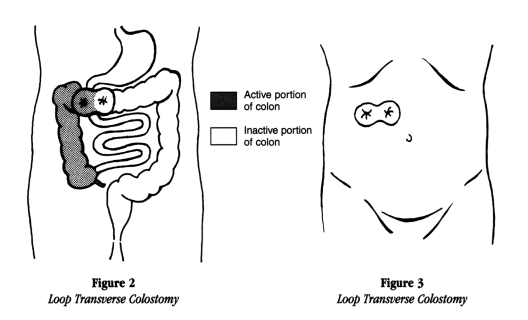
If there are problems in the lower bowel, the affected part of the bowel might need time to rest and heal. A transverse colostomy may be used to keep stool out of the area of the colon that’s inflamed, infected, diseased, or newly operated on – this allows healing to take place. This type of colostomy is usually temporary. Depending on the healing process, the colostomy may be needed for a few weeks, months, or even years. If you heal over time, the colostomy is likely to be surgically reversed (closed) and you will go back to having normal bowel function. A permanent transverse colostomy is made when the lower portion of the colon must be removed or permanently rested, or if other health problems make the patient unable to have more surgery. The colostomy is then the permanent exit for stool and will not be closed in the future. Loop transverse colostomy (Figures 2 and 3): The loop colostomy may look like one very large stoma, but it has 2 openings. One opening puts out stool, the other only puts out mucus. The colon normally makes small amounts of mucus to protect itself from the bowel contents. This mucus passes with the bowel movements and is usually not noticed. Despite the colostomy, the resting part of the colon keeps making mucus that will come out either through the stoma or through the rectum and anus. This is normal and expected. 
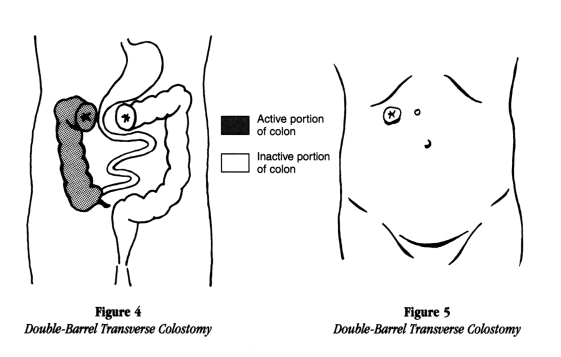
Double-barrel transverse colostomy (Figures 4 and 5): When creating a double-barrel colostomy, the surgeon divides the bowel completely. Each opening is brought to the surface as a separate stoma. The 2 stomas may or may not be separated by skin. Here, too, one opening puts out stool and the other puts out only mucus (this smaller stoma is called a mucus fistula). Sometimes the end of the inactive part of the bowel is sewn closed and left inside the belly. Then there’s only one stoma. The mucus from the resting portion of the bowel comes out through the anus
 Changes in the newly formed transverse colostomyRight after surgery, your colostomy may be covered with bandages or it may have a clear pouch over it. The type of pouch used right after surgery is usually different from those you’ll use at home. Before you look at your colostomy for the first time, keep in mind that it may be quite swollen after surgery; there may also be bruises and stitches. While a stoma normally is moist and pink or red in color, it may be darker at first. Your stoma will change a lot as it heals. It will get smaller and any discoloration will go away, leaving a moist red or pink stoma. This may take several weeks. You’ll soon notice that, although you can usually tell when your colostomy is going to pass stool or gas, you can’t control it. Your colostomy does not have a valve-like sphincter muscle like your anus does. Because of this, you’ll need to wear a pouch over your colostomy to collect the output. Your ostomy nurse or doctor will help you find a pouching system that’s right for you. This is also discussed in more detail in Choosing a colostomy pouching system. Managing a transverse colostomyWhen a colostomy is made in the right half of the colon (near the ascending colon), only a short portion of colon leading to it is active. The stool that comes out of a transverse colostomy varies from person to person and even from time to time. A few transverse colostomies put out firm stool at infrequent intervals, but most of them move often and put out soft or loose stool. It’s important to know that the stool contains digestive enzymes (chemicals made by the body to break down food). These enzymes are very irritating, so the nearby skin must be protected. (See Protecting the skin around the stoma under Caring for a Colostomy for more on this.) Trying to control a transverse colostomy with special diets, medicines, enemas, or irrigations usually doesn’t work and is seldom advised. In most cases, a pouching system is worn over a transverse colostomy at all times. A lightweight, drainable pouch holds the output and protects the skin from contact with the stool. The pouch doesn’t usually bulge, and it’s not easy to see under your clothes. Bowel movements with a transverse colostomyA transverse colostomy will put out stool no matter what you do. Keep in mind these points:
Ascending colostomyThe ascending colostomy is placed on the right side of the belly. Only a short portion of colon remains active. This means that the output is liquid and contains many digestive enzymes. A drainable pouch must be worn at all times, and the skin must be protected from the output. This type of colostomy is rare because an ileostomy is often a better choice if the discharge is liquid. (For more on this, see Ileostomy: A Guide.) Caring for an ascending colostomy is much like caring for a transverse colostomy (as discussed above). Descending and sigmoid colostomiesLocated in the descending colon, the descending colostomy (Figure 6) is placed on the lower left side of the belly. Most often, the output is firm and can be controlled. A sigmoid colostomy (Figure 7) is the most common type of colostomy. It’s made in the sigmoid colon, and located just a few inches lower than a descending colostomy. Because there’s more working colon, it may put out solid stool on a more regular schedule.
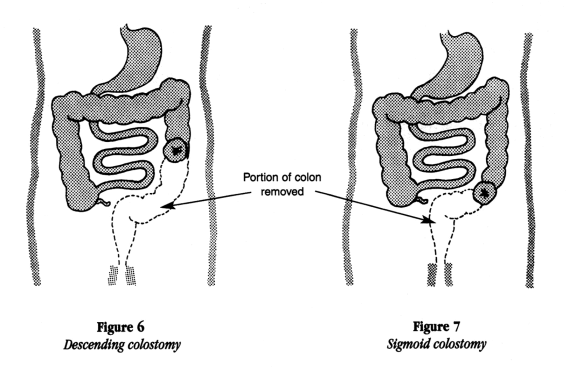 Both the descending and the sigmoid colostomies can have a double-barrel or single-barrel opening. The single-barrel, or end colostomy, is more common. The stoma of the end colostomy is either sewn flush with the skin or it’s turned back on itself (like the turned-down top of a sock). You will notice with a descending or sigmoid colostomy:
Bowel movements with a descending or sigmoid colostomyYou can treat a bowel movement through a colostomy like a normal movement through the anus; just let it happen naturally. But, unlike the anal opening, the colostomy does not have a sphincter muscle that can stop the passage of stool
Constipation or loose stoolMany people think that you must have a bowel movement every day. In truth, this varies from person to person. Some people have 2 or 3 movements a day, while others have a bowel movement every 2 or 3 days or even less often. It may take some time after surgery to figure out what’s normal for you. While many descending and sigmoid colostomies can be trained to move regularly, some cannot. Training, with or without stimulation, is likely to happen only in those people who had regular bowel movements before they became ill. If bowel movements were irregular in earlier years, it may be hard, or impossible, to have regular, predictable colostomy function. Spastic colon, irritable bowel, and some types of indigestion are some conditions that cause people with colostomies to continue to have bouts of constipation or loose stool. Closing or reversing a colostomyIf you’re going to have your colostomy closed, the surgeon might mention plans to “take it down” or “reverse it” in a few weeks or months, but sometimes the doctor doesn’t say anything about it. It’s best to talk to your surgeon about these things before you leave the hospital so you know what the plans are and when to see the surgeon again. If you’re at home now and didn’t get instructions, call the doctor’s office or clinic and find out what the doctor wants you to do. It’s your job to stay in touch with the doctor. Many things must be taken into account when thinking about closing a colostomy, such as:
Choosing a pouching systemDeciding what pouching system or appliance is best for you is a very personal matter. When you’re trying out your first pouching system, it’s best to talk with an ostomy nurse or someone who has experience in this area. There should be someone in the hospital who can get you started with equipment and instructions after surgery. As you’re getting ready to leave the hospital, be sure you are referred to a Wound Ostomy Continence nurse (WOCN or WOC nurse, also called an ostomy nurse), a clinic, an ostomy manufacturer, or a chapter of the United Ostomy Associations of America. Even if you must go out of town to get such help, it’s worthwhile, as you want to get a good start and avoid mistakes. Even with help, you may have to try different types or brands of pouching systems to find the one that best suits you. (See Getting Colostomy Help, Information, and Support.) There are many things to think about when trying to find the pouching system that will work best for you. The length of the stoma, abdominal firmness and shape, the location of the stoma, scars and folds near the stoma, and your height and weight all must be considered. Special changes may have to be made for stomas near the hipbone, waistline, groin, or scars. Some companies have custom-made products to fit unusual situations. A good pouching system should be:
Types of pouching systemsPouches come in many styles and sizes, but they all have a collection pouch to collect stool drainage that comes out of the stoma and an adhesive part (called a flange, skin barrier, or wafer) that protects the surrounding skin. There are 2 main types of systems available:
Some pouching systems can be opened at the bottom for easy emptying. Others are closed and are taken off when they are full. Still others allow the adhesive skin barrier to stay on the body while the pouch may be taken off, washed out, and reused. Pouches are made from odor-resistant materials and vary in cost. They can be either clear or opaque and come in different lengths. Figures 8 through 15 show some of the different kinds of pouches, plus other supplies that may be needed, such as flanges, clips, and belts (to help hold the pouch in place).  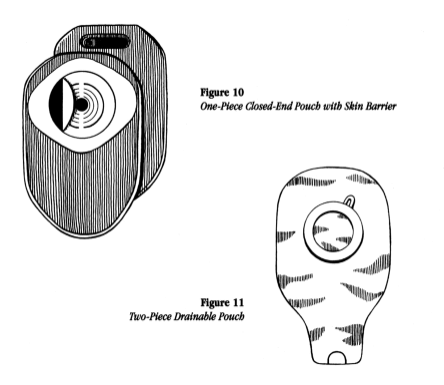 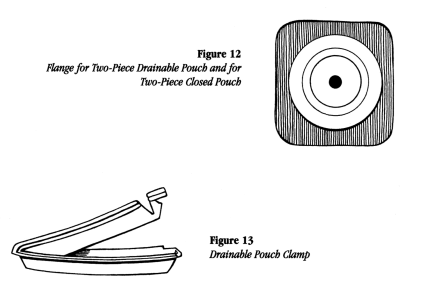 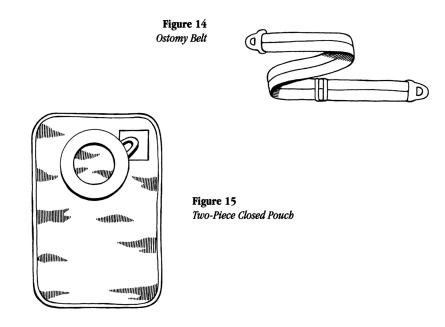
The opening of the skin barrier or wafer of the pouch needs to fit your stoma. The opening should be no more than 1/8 inch larger than the stoma. Depending on the pouch design, you may need to cut a hole out for your stoma, or the wafer may be sized and pre-cut. The size of the hole is important because the wafer is designed to protect the nearby skin from the stoma output and be as gentle to the skin as possible. After surgery, your stoma may be swollen for about 6 to 8 weeks. During this time the stoma should be measured about once a week. A measuring card may be included in boxes of pouches, or you can make your own template to match your stoma shape and get the best fit.
 Caring for a ColostomyProtecting the skin around the stomaThe skin around your stoma should always look the same as skin anywhere else on your abdomen. But ostomy output can make this skin tender or sore. Here are some ways to help keep your skin healthy: Use the right size pouch and skin barrier opening. An opening that’s too small can cut or injure the stoma and may cause it to swell. If the opening is too large, output could get to and irritate the skin. In both cases, change the pouch or skin barrier and replace it with one that fits well. Change the pouching system regularly to avoid leaks and skin irritation. Itching and burning are signs that the skin needs to be cleaned and the pouching system should be changed. Do not rip the pouching system away from the skin or remove it more than once a day unless there’s a problem. Remove the skin barrier gently by pushing your skin away from the sticky barrier rather than pulling the barrier away from the skin. Clean the skin around the stoma with water. Dry the skin completely before putting on the skin barrier or pouch. Watch for sensitivities and allergies to the adhesive, skin barrier, paste, tape, or pouch material. They can develop after weeks, months, or even years of using a product because you can become sensitized over time. If your skin is irritated only where the plastic pouch touches it, you might try a pouch cover or a different brand of pouch. Pouch covers are available from supply manufacturers, or you can make your own. You may have to test different products to see how your skin reacts to them. If you feel comfortable testing yourself, follow the directions under “Patch testing” that follow. If you’re not comfortable doing this on your own and the problem continues, talk to your doctor or ostomy nurse. Patch testing different products for skin sensitivity or allergies Patch testing can be done to see if you’re sensitive to or allergic to a product used as part of your ostomy care. Place a small piece of the material to be tested on the skin of your belly, far away from the stoma. If the material is not self-sticking attach it with an adhesive tape that you know you’re not allergic to (Figures 21 and 22). Leave it on for 48 hours. 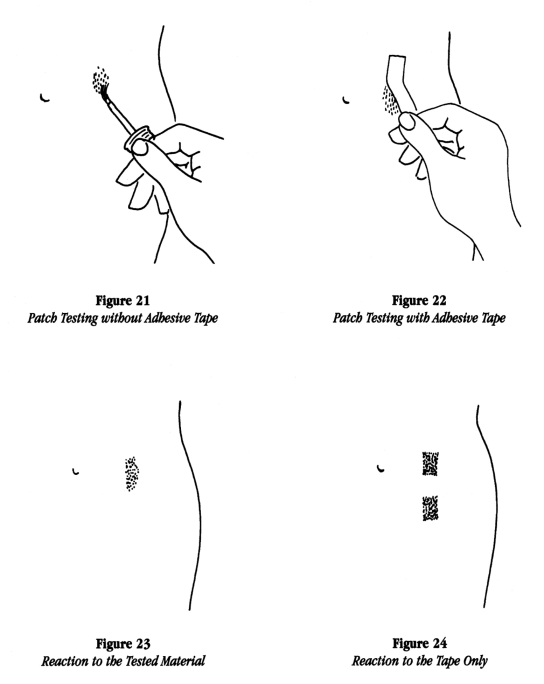 Colostomy irrigation (for descending and sigmoid colostomies only)The person living with a descending or sigmoid colostomy has the option of managing their colostomy with irrigation. Irrigation is simply putting water into the colon through the stoma to help regulate bowel movements. Whether to irrigate is up to each person, but you should fully discuss it with your doctor or ostomy nurse before a decision is made. Your doctor or ostomy nurse will teach you how to irrigate your colostomy. The procedure may be a little different from what we describe here, depending on the experience of the person teaching you. Whether you will choose to irrigate your colostomy and how you do it depends on many factors, such as:
If you decide to irrigate, try to find a method, or combination of methods, that most closely matches your body’s normal bowel habit or pattern. At first, you may need to try different things under a doctor or nurse’s guidance. Just remember, it will take time to set up a routine. Having regular daily habits will help. If you find certain foods or irrigation procedures help regulate your bowel movements, keep doing those things at the same time every day. Regular habits will promote regular bowel functions, but occasional changes in routine won’t harm you. The equipment (Figures 17 to 20) you’ll use includes:
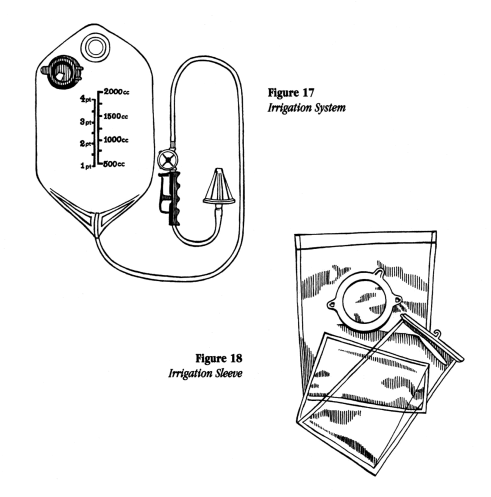
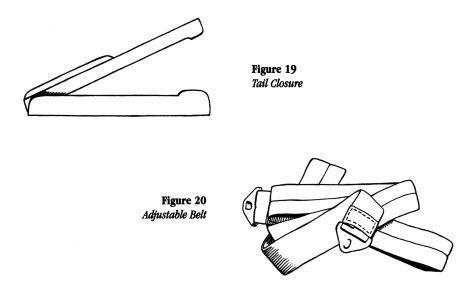 When to irrigate
How to irrigate
With time and experience, you’ll know when all the water and stool have come out. A squirt of gas may be a sign that the process is done, or the stoma may look quiet or inactive. If the complete irrigation process always takes much more than an hour, talk to your doctor or ostomy nurse. Emptying and changing the ostomy pouching systemYou’ll be taught how to change and empty your pouching system before you leave the hospital. You don’t have to use sterile supplies. For instance, facial tissue, toilet paper, or paper towels can be used to clean around the stoma instead of sterile gauze pads. How to empty the pouchEmpty the ostomy pouch when it is about 1/3 full to keep it from bulging and leaking. Follow these steps:
When to change the pouching systemDifferent pouching systems are made to last different lengths of time. Some are changed every day, some every 3 days or so, and some just once a week. It depends on the type of pouch you use. There may be less bowel activity at certain times in the day. It’s easiest to change the pouching system during these times. You may find that early morning before you eat or drink is best. Or allow at least 1 hour after a meal, when digestive movement has slowed down. Right after surgery, ostomy output may be thin and watery. As the output gets thicker, you’ll be better able to find the best time for changing your system. Factors that affect the pouching system sealThe pouching system must stick to your skin. It’s important to change it before it loosens or leaks. The length of time a pouch will stay sealed to the skin depends on many things, such as the weather, skin condition, scars, weight changes, diet, activity, body shape near the stoma, and the nature of the ostomy output. Here are some other things that may affect how long a pouch sticks:
BathingWater will not hurt your ostomy. While it is certainly possible to take a bath without a pouching system, it is highly impractical without one for the most obvious of reasons, primarily the risk of fecal output while bathing, which of course you cannot control. You can take a shower with or without a pouching system in place, but its recommended to take a bath with a pouch. Normal exposure to air or contact with soap and water won’t harm the stoma. Water will not flow into the stoma. Soap will not irritate it, but soap may interfere with the skin barrier sticking to the skin. It’s best to only use water while cleaning the skin around your stoma. If you do use soap, be sure to rinse your skin well. Spots of blood on the stomaSpots of blood are not a cause for alarm. Cleaning around the stoma as you change the pouch or skin barrier may cause slight bleeding. The blood vessels in the tissues of the stoma are very delicate at the surface and are easily disturbed. The bleeding will usually stop quickly. If it doesn’t, call your ostomy nurse or your doctor. Shaving hair under the pouchHaving a lot of hair around the stoma can make it hard to get the skin barrier to stick well and may cause pain when you remove it. Shaving with a razor or trimming hair with scissors is helpful. Extra care should always be taken when doing this. It’s recommended that you dry shave the skin around your stoma with stoma powder, since soap and shaving creams have lotions and oils that may cause the skin barrier not to stick. After shaving, rinse well and dry the skin well before applying your pouch. What to wear when you have a colostomyYou will not need special clothes for everyday wear. Ostomy pouches are fairly flat and hard to see under most clothing. The pressure of elastic undergarments won’t harm the stoma or prevent bowel function. If you were sick before surgery, you may find you can now eat normally for the first time in years. As your appetite returns, you may gain weight. This can affect the clothes you choose more than the pouching system itself. Snug undergarments such as cotton stretch underpants, t-shirts, or camisoles may give you extra support, security, and help conceal pouches. A simple pouch cover adds comfort by absorbing body sweat and keeps the plastic pouch from resting against your skin. Men can wear either boxer or jockey-type shorts. Managing colostomy problemsGas (flatulence)Right after surgery it may seem that you have a lot of gas almost all the time. Most abdominal surgery is followed by this uncomfortable, embarrassing, yet harmless symptom. Gassy noises or stomach rumblings may be a concern. If you are concerned about others nearby hearing this, you can say, “Excuse me, my stomach’s growling.” If you feel as though you are about to release gas when you’re with people, casually fold your arms across your belly so that your forearm rests over your stoma. This will muffle most sounds. Check with your ostomy nurse about products you can take to help lessen gas. Certain foods may cause gas, such as eggs, cabbage, broccoli, onions, fish, beans, milk, cheese, carbonated drinks, and alcohol.
OdorMany factors, such as foods, normal bacteria in your intestine, illness, certain medicines, and vitamins can cause odor.
Finding medicine capsules in your pouchBe aware that coated tablets or time-released capsules may come out whole in the pouch. In most cases, this means you didn’t get the medicine. If you notice this, talk with your health care provider or pharmacist. There may be other medicines you can use to make sure you’re getting what you need. Liquid or liquid gel medicines tend to absorb faster and may work better for you. Severe skin problemsLarge areas of skin that are red, sore, and weeping (always wet) will keep you from getting a good seal around your stoma. It’s important to treat minor irritations right away. If you have a large irritated area, or one that’s getting larger despite special care, contact your doctor or ostomy nurse. They may prescribe medicine to help dry out and heal your skin. For deep pressure ulcers caused by a very tight ostomy belt, loosen or remove the belt and call your doctor or ostomy nurse right away. You will need treatment. Blockage (obstruction)There will be times when your ostomy does not have output for short periods of time. This is normal. But, if your stoma is not active for 4 to 6 hours and you have cramps, pain, and/or nausea, the intestine could be blocked (the medical word is obstructed). Call your doctor or ostomy nurse right away if this happens. These are some things you can do to help move things through your ostomy:
Foods high in fiber such as cabbage, greens, celery, pineapple, nuts, coconut, and corn can cause obstruction. Obstruction can also be caused by internal changes such as adhesions (scar tissue that forms inside your abdomen after surgery). If you keep having pain and cramping with no output from your stoma for more than 2 hours, and you can’t reach your doctor or ostomy nurse, go to the emergency room. Take all your ostomy supplies with you. DiarrheaDiarrhea is usually a warning that something isn’t right. Diarrhea is defined as frequent loose or watery bowel movements in greater amounts than usual. It happens when food passes through the small intestine too quickly for fluids and electrolytes to be absorbed. It can come on suddenly and may cause cramps. It can cause your body to lose a lot of fluids and electrolytes. You must quickly replace these electrolytes to avoid getting sick from dehydration and mineral loss. (See Electrolyte imbalance below for more on this.) Loose stool can also come from eating certain foods, but it usually only lasts a short time. Raw fruits and vegetables, milk, fruit juice, prune juice, or impure drinking water are examples of things that may change your stoma output. Emotional stress may also cause loose stool. Some people with ileostomies may always have “watery discharge,” and this is normal for them. Several things can cause diarrhea:
Talk with your doctor or ostomy nurse if you have ongoing diarrhea. Discuss the foods and liquids you take in, your eating schedule, how much you usually eat, and any medicines you might be taking. You may be given medicine to help slow things down. Remember, no matter what, you need a well-balanced diet and good fluid intake to have a good output. Electrolyte imbalanceElectrolytes are salts and minerals in the blood, like potassium, magnesium, and sodium. Keeping them balanced is important. When the colon (large intestine) is removed, you’re at a greater risk for electrolyte imbalance. Diarrhea, vomiting, and a lot of sweating can increase this risk. Dehydration is also a serious concern. Symptoms include increased thirst, dry mouth, decreased urine output, feeling light-headed, and feeling tired. If you get dehydrated, you’ll need to drink more fluids. To avoid dehydration, you should try to drink 8 to 10 eight-ounce glasses of fluid a day. If you have diarrhea, you may need more. Drinks such as Gatorade®, PowerAde®, or Pedialyte® contain potassium and sodium. But any liquid containing water (soda, milk, juice, tea, etc.) helps to meet your daily need for fluid. Loss of appetite, drowsiness, and leg cramps may be signs of sodium loss. Fatigue, muscle weakness, and shortness of breath may be signs of potassium loss. Dehydration, low sodium, and low potassium can all be dangerous and should be treated right away. Keep in mind that some of these symptoms can be caused by other problems which may be emergencies. Call your doctor or 911 right away if you are dizzy, weak, or having other serious symptoms. Phantom rectumPhantom rectum is much like the “phantom limb” of amputees who feel as if their removed limb is still there. It’s normal for you to have the urge to move your bowels the way you did before surgery. This can happen at any time and may go on for years after surgery. If the rectum has not been removed, you may have this feeling and also may pass mucus when sitting on the toilet. Some people who have had their rectum removed say that the feeling is helped by sitting on the toilet and acting as if a bowel movement is taking place. Short bowel syndromeThis condition happens when surgery is done to remove a large part of the small intestine. Short bowel syndrome needs special attention because there’s not enough intestine left to absorb the nutrients the body needs. People with short bowel syndrome must be under a doctor’s care. They must be closely watched to make sure they’re taking in enough calories, carbohydrates, proteins, fats, vitamins, and minerals. They can live a normal life, but must be careful to avoid diarrhea, and be within quick reach of medical care. The shorter the small intestine, the more watery the discharge will be. This may reduce the time a pouch can be worn because the skin barrier breaks down more rapidly. When you should call the doctorYou should call the doctor or ostomy nurse if you have:
Ordering and storing ostomy suppliesSupplies may be ordered from a mail order company, from a medical supply store, a local pharmacy, or online. For additional help ordering, try contacting the product manufacturer, check your local phone book’s business pages, or check the Internet (try searching for “ostomy supplies”).
What Is an Ileostomy?An ileostomy is an opening in the belly (abdominal wall) that’s made during surgery. The end of the ileum (the lowest part of the small intestine) is brought through this opening to form a stoma, usually on the lower right side of the abdomen. A Wound Ostomy Continence nurse (WOCN or WOC nurse) or the surgeon will figure out the best location for your stoma. (A WOC nurse is a specially trained registered nurse who takes care of and teaches ostomy patients. This nurse may also be called an ostomy nurse.) When you look at your stoma, you are actually looking at the lining (the mucosa) of your small intestine, which looks a lot like the inside lining of your cheek. The stoma will look pink to red. It’s warm and moist and secretes small amounts of mucus. It will shrink shortly after surgery. It's shape will be round to oval. Some stomas may stick out a little, while others are flush with the skin. Unlike the anus, the stoma has no valve or shut-off muscle. This means you won’t be able to control stool passing from the stoma. There are no nerve endings in the stoma, so the stoma itself is not a source of pain or discomfort. As part of this surgery, the colon (the main part of large intestine) and rectum (the lowest part of large intestine where formed stool is held until it’s passed out of the body through the anus) are often removed (this is called a colectomy). This means that colon and rectum no longer function as they used to. Sometimes, only part of the colon and rectum are removed. After the colon and rectum are removed or bypassed, waste no longer comes out of the body through the rectum and anus. Digestive contents now leave the body through the stoma. The drainage is collected in a pouch that sticks to the skin around the stoma. The pouch is fitted to you personally. It’s worn at all times and can be emptied as needed. Ileostomy output will be liquid to pasty, depending on what you eat, your medicines, and other factors. Because the output is constant, you’ll need to empty the pouch 5 to 8 times a day. Types of Ileostomies and Pouching SystemsTemporary ileostomiesCertain bowel problems may be treated by giving part of the bowel a rest or with surgery to remove the damaged part. The bowel must be kept empty so it can heal. To keep stool from getting to the bowel, a short-term (temporary) ileostomy is created. Healing may take a few weeks, months, or even years. In time, the ileostomy will be surgically reversed (removed) and the bowel will work much like it did before. A temporary ileostomy can also be done as the first stage in forming an ileo-anal reservoir (or J-pouch). Permanent ileostomiesWhen part of the bowel becomes diseased, a long-term (permanent) ileostomy must be made. The diseased part of the bowel and anus are removed or permanently rested. In this case, the ileostomy is not ever expected to be closed (removed). Three major types of ileostomies may be made when all of the colon must be removed or rested. You and your surgeon should talk about your choices and together decide on the best surgery for you. Some of the things to think about when planning an ileostomy are the disease process, your age, your general health, and your preference. Standard or Brooke ileostomy
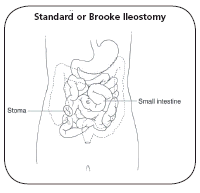 The standard or Brooke ileostomy surgery is done most often. The end of the ileum is pulled through the abdominal wall and is turned back and sutured to the skin, leaving the smooth, rounded, inside-out ileum as the stoma. The stoma is usually in the right lower part of the abdomen, on a flat surface of normal, smooth skin. The fecal output is not controlled. This means you’ll need to wear a collection pouch all the time, and empty it regularly. Continent ileostomy (abdominal pouch)
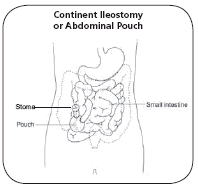 A continent ileostomy is a different type of standard ileostomy. You don’t need to wear an external pouch with this kind of ileostomy. It’s made by looping part of the ileum back on itself so that a reservoir or pocket is formed inside the belly (abdomen). A nipple valve is made from part of the ileum. A few times each day you put in a thin, soft tube called a catheter to drain the waste out of the reservoir inside your belly. Ileo-anal reservoir (J-pouch or pelvic pouch)
 The ileo-anal reservoir or pelvic pouch is a pouch made from the ileum and the rectum and placed inside the body in the pelvis. Other names for this include J-pouch, W-pouch, and S-pouch depending on the surgical procedure. The pouch is connected to the anus. Waste passes into the pouch, where it’s stored. When an “urge” is felt, the stool is passed through the anus, out of the body. The sphincter muscle around the anal opening must be intact to keep the pouch from leaking. The consistency of the output of the pelvic pouch depends on what you eat and drink, and may be managed with medicines. In most cases at least 2 surgeries are needed to make the ileo-anal reservoir or pelvic pouch. Types of pouching systemsA pouching system is needed to collect ileostomy output. Pouches come in many styles and sizes, but they all have a collection pouch to collect stool drainage that comes out of the stoma and an adhesive part (called a flange, skin barrier, or wafer) that protects the surrounding skin. There are 2 main types of systems available:
Depending on the design of the skin barrier or wafer of the pouch, you may need to cut a hole out for your stoma, or it may be sized and pre-cut. It’s designed to protect the skin from the stoma output and be as gentle to the skin as possible. Pouches for one- and two-piece systems are drained through an opening at the bottom. They are made from odor-resistant materials and vary in cost. Pouches are either clear or opaque and come in different lengths. 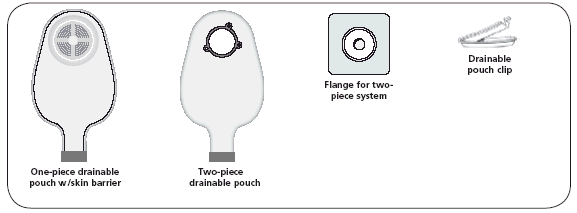 After surgery, the stoma may be swollen for about 6 to 8 weeks. During this time the stoma should be measured about once a week. A measuring card may be included in boxes of pouches, or you can make your own template to match your stoma shape. The opening on the skin barrier should be no more than 1/8 inch larger than the stoma. Belts and tape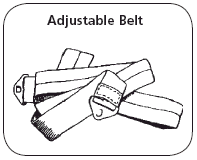 Wearing a belt to help hold the pouch in place is a personal choice. Some people with ileostomies wear a belt because it makes them feel more secure and it supports the pouching system. Others find a belt awkward and use tape instead. Tape can be put around the outside edge of the skin barrier like a frame. If you choose to wear a belt, adjust it so that you can get 2 fingers between the belt and your waist. This helps to keep you from getting a deep groove or cut in the skin around the stoma which can cause serious damage to the stoma and sores (pressure ulcers) on the nearby skin. If a belt is used, it shouldn’t ride above or below the level of the belt tabs on the pouching system. People in wheelchairs may need special belts. Supply companies often carry these special belts or an ostomy nurse can talk to you about making one yourself. Caring for an IleostomyLearning to care for your ileostomy may seem hard at first, but with practice and time it will become second nature, just like shaving or bathing. There’s no one way to take care of an ileostomy. This guide offers you tips and ideas that you can discuss with your doctor or ostomy nurse and adapt to your needs. Give new things a fair trial, but don’t keep doing them if they don’t make you more comfortable. Use your recovery time to learn and try different things so that you can find what works best for you. In our society, bathroom needs are kept private. Talking about stool and bowel movements can be awkward or uncomfortable. This is often true for a person with an ileostomy. But while you learn how to deal with the changes that have been made, you may need help and advice. A good sense of humor and common sense are needed when changes in body function take place. Be confident. You can learn the new system. Before long you again will be in control. Protecting the skin around the stomaThe skin around your stoma should always look the same as skin anywhere else on your abdomen. But ostomy output can make this skin tender or sore. Here are some ways to help keep your skin healthy:
You may have to test different products to see how your skin reacts to them. If you feel comfortable testing yourself, follow the directions under “Patch testing” that follow. If you’re not comfortable doing this on your own and the problem continues, talk to your doctor or ostomy nurse. Patch testingPatch testing can be done to see if you’re sensitive to or allergic to a product used as part of your ostomy care. Place a small piece of the material to be tested on the skin of your belly, far away from the stoma. If the material is not self-sticking attach it with an adhesive tape that you know you’re not allergic to (Figures 21 and 22). Leave it on for 48 hours. 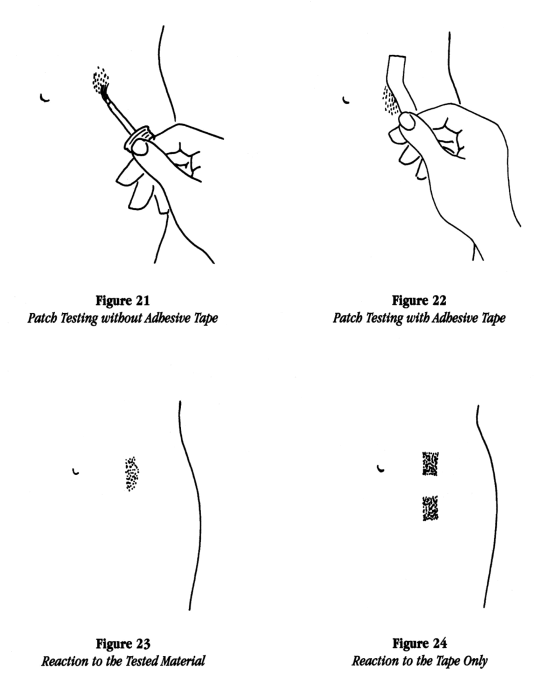 Gently remove the patch at the end of 48 hours and look for redness or spots under the patch. If there's no redness after 48 hours, it's generally safe to use the product. But, in a few cases, reactions that took longer than 48 hours to show up have been reported (Figure 23). Itching or burning before 48 hours pass is a sign of sensitivity. Remove the material right away and wash your skin well with soap and water. A reaction to the tape is also possible. If this is the case, the redness or other irritation will only be in the area outlined by the tape (Figure 24). If you seem to be allergic to a certain product, try one made by another company and patch test it, too. It may take a few tries to find one that works for you. Keep in mind that allergies are not as common as is irritation caused by using a product the wrong way. For this reason, before using a product, always read the directions that come with it. When in doubt, check with your ostomy nurse or doctor. Emptying and changing the pouchingsystemYou’ll be taught how to change and empty your pouching system before you leave the hospital. You don’t have to use sterile supplies. For instance, facial tissue, toilet paper, or paper towels can be used to clean around the stoma instead of sterile gauze pads. How to empty the pouchEmpty the ostomy pouch when it is about 1/3 full to keep it from bulging and leaking. Follow these steps:
When to change the pouching systemDifferent pouching systems are made to last different lengths of time. Some are changed every day, some every 3 days or so, and some just once a week. It depends on the type of pouch you use. There may be less bowel activity at certain times in the day. It’s easiest to change the pouching system during these times. You may find that early morning before you eat or drink is best. Or allow at least 1 hour after a meal, when digestive movement has slowed down. Right after surgery, ostomy output may be thin and watery. As the output gets thicker, you’ll be better able to find the best time for changing your system. Factors that affect the pouching system sealThe pouching system must stick to your skin. It’s important to change it before it loosens or leaks. The length of time a pouch will stay sealed to the skin depends on many things, such as the weather, skin condition, scars, weight changes, diet, activity, body shape near the stoma, and the nature of the ostomy output. Here are some other things that may affect how long a pouch sticks:
BathingWater will not hurt your ostomy. While it is certainly possible to take a bath without a pouching system, it is highly impractical without one for the most obvious of reasons, primarily the risk of fecal output while bathing, which of course you cannot control. You can take a shower with or without a pouching system in place, but its recommended to take a bath with a pouch. Normal exposure to air or contact with soap and water won’t harm the stoma. Water will not flow into the stoma. Soap will not irritate it, but soap may interfere with the skin barrier sticking to the skin. It’s best to only use water while cleaning the skin around your stoma. If you do use soap, be sure to rinse your skin well. Spots of blood on the stomaSpots of blood are not a cause for alarm. Cleaning around the stoma as you change the pouch or skin barrier may cause slight bleeding. The blood vessels in the tissues of the stoma are very delicate at the surface and are easily disturbed. The bleeding will usually stop quickly. If it doesn’t, call your ostomy nurse or your doctor. Shaving hair under the pouchHaving a lot of hair around the stoma can make it hard to get the skin barrier to stick well and may cause pain when you remove it. Shaving with a razor or trimming hair with scissors is helpful. Extra care should always be taken when doing this. It’s recommended that you dry shave the skin around your stoma with stoma powder, since soap and shaving creams have lotions and oils that may cause the skin barrier not to stick. After shaving, rinse well and dry the skin well before applying your pouch. What to wear when you have a ileostomyYou will not need special clothes for everyday wear. Ostomy pouches are fairly flat and hard to see under most clothing. The pressure of elastic undergarments won’t harm the stoma or prevent bowel function. If you were sick before surgery, you may find you can now eat normally for the first time in years. As your appetite returns, you may gain weight. This can affect the clothes you choose more than the pouching system itself. Snug undergarments such as cotton stretch underpants, t-shirts, or camisoles may give you extra support, security, and help conceal pouches. A simple pouch cover adds comfort by absorbing body sweat and keeps the plastic pouch from resting against your skin. Men can wear either boxer or jockey-type shorts. Managing ostomy problemsGas (flatulence)Right after surgery it may seem that you have a lot of gas almost all the time. Most abdominal surgery is followed by this uncomfortable, embarrassing, yet harmless symptom. Gassy noises or stomach rumblings may be a concern. If you are concerned about others nearby hearing this, you can say, “Excuse me, my stomach’s growling.” If you feel as though you are about to release gas when you’re with people, casually fold your arms across your belly so that your forearm rests over your stoma. This will muffle most sounds. Check with your ostomy nurse about products you can take to help lessen gas. Certain foods may cause gas, such as eggs, cabbage, broccoli, onions, fish, beans, milk, cheese, carbonated drinks, and alcohol.
OdorMany factors, such as foods, normal bacteria in your intestine, illness, certain medicines, and vitamins can cause odor.
Finding medicine capsules in your pouchBe aware that coated tablets or time-released capsules may come out whole in the pouch. In most cases, this means you didn’t get the medicine. If you notice this, talk with your health care provider or pharmacist. There may be other medicines you can use to make sure you’re getting what you need. Liquid or liquid gel medicines tend to absorb faster and may work better for you. Severe skin problemsLarge areas of skin that are red, sore, and weeping (always wet) will keep you from getting a good seal around your stoma. It’s important to treat minor irritations right away. If you have a large irritated area, or one that’s getting larger despite special care, contact your doctor or ostomy nurse. They may prescribe medicine to help dry out and heal your skin. For deep pressure ulcers caused by a very tight ostomy belt, loosen or remove the belt and call your doctor or ostomy nurse right away. You will need treatment. Blockage (obstruction)There will be times when your ostomy does not have output for short periods of time. This is normal. But, if your stoma is not active for 4 to 6 hours and you have cramps, pain, and/or nausea, the intestine could be blocked (the medical word is obstructed). Call your doctor or ostomy nurse right away if this happens. These are some things you can do to help move things through your ostomy:
Foods high in fiber such as cabbage, greens, celery, pineapple, nuts, coconut, and corn can cause obstruction. Obstruction can also be caused by internal changes such as adhesions (scar tissue that forms inside your abdomen after surgery). If you keep having pain and cramping with no output from your stoma for more than 2 hours, and you can’t reach your doctor or ostomy nurse, go to the emergency room. Take all your ostomy supplies with you. DiarrheaDiarrhea is usually a warning that something isn’t right. Diarrhea is defined as frequent loose or watery bowel movements in greater amounts than usual. It happens when food passes through the small intestine too quickly for fluids and electrolytes to be absorbed. It can come on suddenly and may cause cramps. It can cause your body to lose a lot of fluids and electrolytes. You must quickly replace these electrolytes to avoid getting sick from dehydration and mineral loss. (See Electrolyte imbalance below for more on this.) Loose stool can also come from eating certain foods, but it usually only lasts a short time. Raw fruits and vegetables, milk, fruit juice, prune juice, or impure drinking water are examples of things that may change your stoma output. Emotional stress might also cause loose stool. Some people with ileostomies may always have “watery discharge,” and this is normal for them. Several things can cause diarrhea:
Talk with your doctor or ostomy nurse if you have ongoing diarrhea. Discuss the foods and liquids you take in, your eating schedule, how much you usually eat, and any medicines you might be taking. You may be given medicine to help slow things down. Remember, no matter what, you need a well-balanced diet and good fluid intake to have a good output. Electrolyte imbalanceElectrolytes are salts and minerals in the blood, like potassium, magnesium, and sodium. Keeping them balanced is important. When the colon (large intestine) is removed, you’re at a greater risk for electrolyte imbalance. Diarrhea, vomiting, and a lot of sweating can increase this risk. Dehydration is also a serious concern. Symptoms include increased thirst, dry mouth, decreased urine output, feeling light-headed, and feeling tired. If you get dehydrated, you’ll need to drink more fluids. To avoid dehydration, you should try to drink 8 to 10 eight-ounce glasses of fluid a day. If you have diarrhea, you may need more. Drinks such as Gatorade®, PowerAde®, or Pedialyte® contain potassium and sodium. But any liquid containing water (soda, milk, juice, tea, etc.) helps to meet your daily need for fluid. Loss of appetite, drowsiness, and leg cramps may be signs of sodium loss. Fatigue, muscle weakness, and shortness of breath may be signs of potassium loss. Dehydration, low sodium, and low potassium can all be dangerous and should be treated right away. Keep in mind that some of these symptoms can be caused by other problems which may be emergencies. Call your doctor or 911 right away if you are dizzy, weak, or having other serious symptoms. Phantom rectumPhantom rectum is much like the “phantom limb” of amputees who feel as if their removed limb is still there. It’s normal for you to have the urge to move your bowels the way you did before surgery. This can happen at any time and may go on for years after surgery. If the rectum has not been removed, you may have this feeling and also may pass mucus when sitting on the toilet. Some people who have had their rectum removed say that the feeling is helped by sitting on the toilet and acting as if a bowel movement is taking place. Short bowel syndromeThis condition happens when surgery is done to remove a large part of the small intestine. Short bowel syndrome needs special attention because there’s not enough intestine left to absorb the nutrients the body needs. People with short bowel syndrome must be under a doctor’s care. They must be closely watched to make sure they’re taking in enough calories, carbohydrates, proteins, fats, vitamins, and minerals. They can live a normal life, but must be careful to avoid diarrhea, and be within quick reach of medical care. The shorter the small intestine, the more watery the discharge will be. This may reduce the time a pouch can be worn because the skin barrier breaks down more rapidly. When you should call the doctorYou should call the doctor or ostomy nurse if you have:
Ordering and storing ostomy suppliesSupplies may be ordered from a mail order company, from a medical supply store, a local pharmacy, or online. For additional help ordering, try contacting the product manufacturer, check your local phone book’s business pages, or check the Internet (try searching for “ostomy supplies”).
Stoma capIf your colostomy puts out stool at regular, expected times, you may be able to use a stoma cover instead of always wearing a pouch. You can place neatly-folded gauze or tissue, dabbed with a small amount of water-soluble lubricant over the stoma, and cover it with a piece of plastic wrap. This can be held in place with medical tape, underclothes, or an elastic garment. Plastic, ready-made stoma caps (Figure 16) are also available. |
|
|

OPEN 24 HOURS: ACCIDENT EMERGENCY, LAB SERVICES, IMAGING SERVICES & PHARMACY




Medical Disclaimer: The Contents of this site is not intended to be a substitute for professional medical advice, diagnosis, or treatment. Always seek the advice of your physician or other qualified health provider with any questions you may have regarding a medical condition or treatment.


Medical Disclaimer: The Contents of this site is not intended to be a substitute for professional medical advice, diagnosis, or treatment. Always seek the advice of your physician or other qualified health provider with any questions you may have regarding a medical condition or treatment.